
This post is also available in:

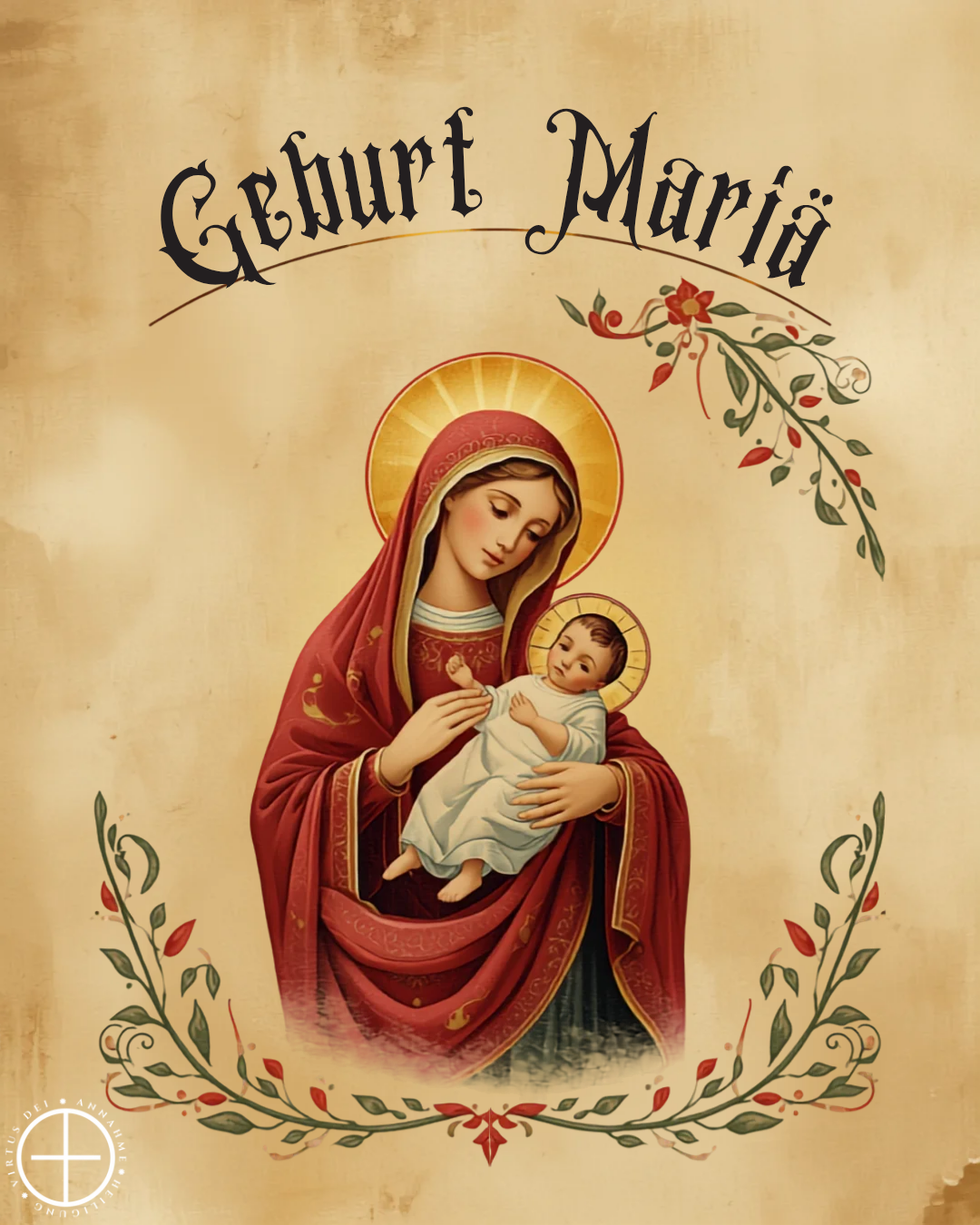
This post is also available in: In the liturgical year, we rarely celebrate birthdays. For the saints, we usually commemorate their day of death—their homecoming into eternal life. Yet there are three exceptions: Christ himself, John the Baptist, and Mary on September 8th. This feast possesses its own unique, quiet character. The biblical scriptures are […]

God’s power,
mighty in weakness,
light in the darkness,
the sustaining foundation of our lives.
Human worth is not found in performance.
Sanctify everyday life
Acceptance Instead of Achievement
Sanctification is not achieved through flawless fulfillment of duties or spiritual self-optimization, but through the receptive acceptance of unmerited grace. It is not your performance that sanctifies everyday life, but your willingness to let God carry you in your limitations and neediness.
“For by grace you have been saved through faith, and that not of yourselves; it is the gift of God, not of works, lest anyone should boast.”
(Eph 2:8–9)
Strength in Weakness
The primary place of sanctification is not the halo of heroic willpower, but human powerlessness. Where one’s own resources, concepts, and securities reach their limits, space opens up for God’s true power: His faithfulness proves itself in the abyss.
“But he said to me, ‘My grace is sufficient for you, for my power is made perfect in weakness.’ Therefore I will boast all the more gladly about my weaknesses, so that Christ’s power may rest on me. […] For when I am weak, then I am strong.”
(2 Cor 12:9–10)
Presence in the Fragmented
God meets you not in the flawlessly completed daily work, but in the midst of the fragmented. Sudden interruptions, illness, exhaustion, and unfinished tasks are not failures on the path of sanctification, but holy gateways where the delusion of ‘doing’ dissolves.
“But we have this treasure in jars of clay to show that this all-surpassing power is from God and not from us.”
(2 Cor 4:7)
Mercy as the Fruit of Grace
True sanctification never leads to moral harshness, legalism, or condemnation. It breaks the pride of the pious: only those who have ruthlessly accepted their own vulnerability and guilt before God can encounter their weak fellow human beings with compassionate love, without arrogance.
“I desire mercy, not sacrifice.”
(Matt 9:13)
