
This post is also available in:

The Wounded God at the Edge of the Bed
There are spaces where the mind pauses before entering. A hospital room in a hospice, the stark emergency shelter for drug addicts, the windowless hallway of a psychiatric ward in the early morning. Here, the familiar order of everyday life gives way to a merciless realism. Whoever crosses these thresholds to care for people, support those suffering from addiction, or accompany the dying, leaves the bourgeois comfort zone.
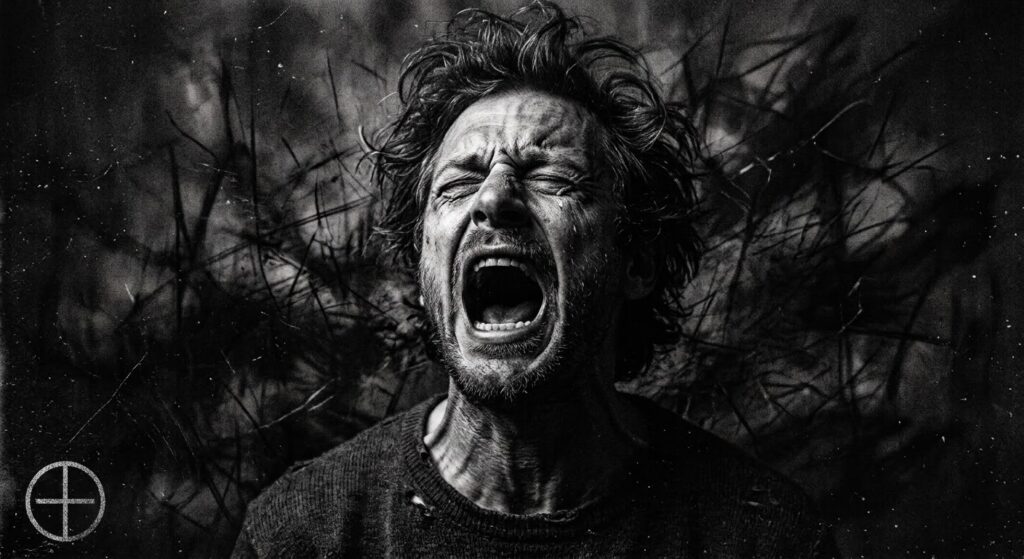
Practical charity is not a pastoral Sunday dream, but hands-on work at the broken places of life. It confronts us unvarnished with what our performance-oriented culture most persistently suppresses: physical decay, existential loss of control, and deep-seated shame. It is precisely in this place that the image of a distant, untouchable God vanishes. Christ is encountered here not in the insignia of sacred power or intellectual sovereignty, but in the face of the existentially wounded.
The Sobering Reality of the Body: The Limit of Bourgeois Aesthetics
Bourgeois daily life thrives on the illusion of intactness. We polish surfaces, optimize bodily functions, perfume the unpleasant, and outsource infirmities behind soundproof walls. But actual suffering cannot be retouched. It smells of old sweat, of disinfectant, of festering wounds, of vomit and excrement. It sounds like the rattling breath of lungs struggling for oxygen, or the inarticulate whimpering of a person in cold withdrawal.
In these places, any merely aesthetic religiosity collapses. Anyone who has ever changed a soiled mattress, dressed a necrotic wound, or endured the vacant gaze of a person whose mind is disintegrating into dementia understands: Man is not an abstract soul in a neutral shell. He is vulnerable, mortal matter.
The prophet Isaiah already describes the figure of the Servant of God without any false sentimentality:
“He had no form or majesty that we should look at him, and no beauty that we should desire him. He was despised and rejected by men, a man of sorrows and acquainted with grief; and as one from whom men hide their faces.”
Isaiah 53:2–3
The confrontation with the shame of the other is an imposition for both sides. For the one being cared for, who must involuntarily expose themselves and tolerate foreign hands at their most intimate boundaries; for the caregiver, who must face the shudder of decay. In this sobering reality of the body, however, lies the beginning of every genuine encounter. Where all masks of status, success, and feigned strength fall away, naked humanity remains. In the mystery of the Incarnation, God took on precisely this vulnerable flesh – He did not identify with the untouchable, but with those in need of touch.
Touching the Vulnerable: Acts of Care as Analogous Foot Washing
In the Gospel of John, a scene of radical subversiveness takes place shortly before the Passover feast. Jesus lays aside his outer garment, ties a linen cloth around himself, pours water into a basin, and washes the dirt of the street from his disciples’ feet (John 13:1–15). It was the lowest slave labor of antiquity, performed on the body part most covered with dust, refuse, and abrasions.
Peter vehemently resists: “You shall never wash my feet!” (John 13:8). His resistance stems not only from humility, but from the horror of having to reveal his own nakedness and impurity before the Master. It is shameful to be washed. Jesus’ gesture breaks the familiar power structure: God kneels in the dust at the feet of man.
Every sincere act in caregiving and addiction support is the analogous continuation of this foot washing. When a caregiver gently applies cream to an irritated skin area, when a social worker cleans the battered hands of an addict, or when a companion moistens the dry mouth of a dying person, this sacred service is repeated. It is a bodily sacrament of everyday life.
Touching the vulnerable overcomes the chasm between helper and those in need. It occurs without condescending pity, on equal footing – or rather, at knee level. By not avoiding the dirt and wounds of the other with disgust, but by touching them, we restore their stolen dignity. We silently testify: Despite your decay, you are not untouchable. You are made in the image of God.
Protection Against Cynicism and Burnout: The Spiritual Source That Sustains
No one who works long-term at the margins of human existence remains untouched by the attrition of the system. The modern social and care sector is often characterized by minute-by-minute schedules, staff shortages, bureaucratic rigidity, and a lack of recognition. Anyone who embarks on this path solely out of a sense of civic duty, humanitarian idealism, or the urge to save the world will inevitably head for collapse.
A mere moral imperative depletes one’s own reserves. If invested compassion does not yield tangible successes – if the addict relapses after three weeks, if the chronic illness progresses despite all care, if dementia erases every memory of gratitude – pure moralism easily turns into bitter cynicism. Cynicism is the armor that exhausted souls don to no longer feel their own pain.
Henri Nouwen coined the image of the wounded healer for this reality:
“No one can help another without being willing to make themselves vulnerable. Whoever wants to alleviate the pain of another must be willing to share in that pain.”
Henri J. M. Nouwen (The Wounded Healer)
What protects against this hardening? A spiritual source is needed that does not depend on visible success:
- Relinquishing Salvation: We are not the saviors. The temptation of the helper syndrome lies in secretly making oneself responsible for the success of others’ lives. Whoever understands that Christ already bore all powerlessness on the cross may lay down the burden of having to save.
- Encountering God Instead of Performance Pressure: In the parable of the Last Judgment in Matthew 25, it does not say: “I was sick, and you made me well.” It simply says: “I was sick and you visited me. […] What you did for one of the least of these brothers of mine, you did for me.”— Matthew 25:36, 40 Service demands not triumphs, but faithfulness and presence. It is not about achieving something great, but about standing by the wounded Christ in the wounded.
- The Prayer of Silence and Lament: Those who endure pain daily need times of retreat – to hold their own emptiness before God. The biblical prayer of lament (as in Psalm 22 or the Lamentations) allows one to bring powerlessness and the shock of suffering uncensored before God, instead of letting it harden into cynicism.
Diaconal strength is not nourished by one’s own moral virtue, but by the experience of being needy oneself. Only those who admit their own limitations and know that they live by undeserved grace can encounter others without becoming arrogant.
Enduring God’s Presence Where the World Looks Away
Society instinctively averts its gaze when decay becomes visible. The homeless are driven out of shopping areas, dying is delegated to the ends of sterile functional buildings, and addiction is preferably discussed in terms of abstract statistics. It is a collective reflex of self-protection against one’s own finitude.
The theological provocation of the cross, however, is that God is present precisely where people look away. Dietrich Bonhoeffer formulated this with unsurpassed clarity during his imprisonment:
“God allows himself to be pushed out of the world onto the cross; God is powerless and weak in the world, and only in this way and with this is he with us and helps us. […] It is not the religious act that makes the Christian, but participation in the suffering of God in worldly life.”
Dietrich Bonhoeffer (Letters and Papers from Prison)
On Golgotha, God is revealed not in the splendor of heaven, but in the cry of the abandoned, in the naked, beaten body bleeding on the wood. Therefore, those who care for the sick, remain faithful to addicts, and hold the hands of the dying perform a fundamental counter-movement to the prevailing logic. They resist the flight into the noncommittal.
This being-there at the margins often does not heal diagnoses, does not resolve societal systemic crises overnight, and rarely diminishes the harshness of pain. But it breaks through the deadly loneliness of suffering. In the moment when two people endure fragility together, a sacred space opens up.
Amidst the smell of illness, amidst the shame of decay, something shines forth that the world can neither give nor comprehend: a dignity that does not depend on functioning, and a peace that does not deny the darkness, but illuminates it from within. Whoever perseveres there has not sought God in lofty heights, but found Him in the dust.
